Case study · Web accessibility litigation
Robles v. Domino's Pizza
Robles v. Domino's Pizza LLC, No. 2:16-cv-06599 (C.D. Cal.), No. 17-55504 (9th Cir.), No. 18-1539 (U.S.)
A blind customer could not complete a pizza order through Domino's website or app. The case established how the ADA's physical-place nexus applies to those digital services in the Ninth Circuit, but it did not decide every issue often attributed to it.
Updated September 2026Reviewed by The Accessibility.build team
- Filed
- 1 September 2016
- Closed
- 21 June 2022
- Duration
- 5 years, 9 months
- Courts
- Three
- Damages awarded
- $4,000
- Outcome
- Settlement; terms confidential
What happened
Guillermo Robles is blind. He uses JAWS on his laptop and VoiceOver on his iPhone. He was unable to order through the website in July 2015, July and September 2016, and February 2017, and through the app in July 2016 and June 2019. In September 2016 he sued under Title III of the Americans with Disabilities Act and California's Unruh Civil Rights Act.
His requested relief included an injunction requiring Domino's to conform its website and app to the Web Content Accessibility Guidelines 2.0, statutory damages under Californian law, and fees, expenses, interest and costs. Domino's did not resolve the case early. It litigated the question of whether the ADA applied to its website at all, lost in the Ninth Circuit, asked the Supreme Court to take the case, was refused, lost again on the website claims in the district court, and settled on confidential terms in June 2022.
The published Ninth Circuit opinion is an important federal appellate authority for the proposition that a website and app can fall within Title III when they connect customers to the goods and services of a physical public accommodation. The public record does not disclose Domino's litigation spend, remediation cost, legal-fee resolution or settlement amount.
What the complaint alleged
The complaint first recited a sixteen-item list of barriers commonly encountered on inaccessible sites and apps. It then identified the defects Robles allegedly encountered more specifically: on the website, graphics without text alternatives, empty links, redundant adjacent links and linked images without text alternatives; in the iOS app, buttons that were not clearly labelled as Apple's accessibility guidance required, along with missing text alternatives, inaccessible forms and image maps, and inadequate prompting and labelling. Robles alleged that the barriers prevented him from completing the ordering flow with his screen readers.
Several expressly alleged defects map to Level A success criteria in WCAG 2.2. That mapping is an editorial comparison, not a criterion-by-criterion finding made by the court. Missing attributes and accessible names are often detectable with automated tools, but automation cannot determine every failure or whether the ordering journey works for a screen-reader user.
Selected specifically alleged barriers and an editorial WCAG 2.2 mapping
| Barrier | Success criterion | Level | Can automation flag some cases? |
|---|---|---|---|
| Website graphics with no text alternative | 1.1.1 Non-text Content | A | Often; alternative quality needs review |
| Empty website links containing no text | 2.4.4 Link Purpose (In Context) | A | Often; link context needs review |
| Linked website images with no text alternative | 1.1.1 Non-text Content and 2.4.4 Link Purpose (In Context) | A | Often; link purpose and alternative quality need review |
| iOS app buttons not clearly labelled | 4.1.2 Name, Role, Value | A | Often; name quality needs review |
| Redundant adjacent links | Not automatically a WCAG failure; assess link purpose and structure | Context dependent | No |
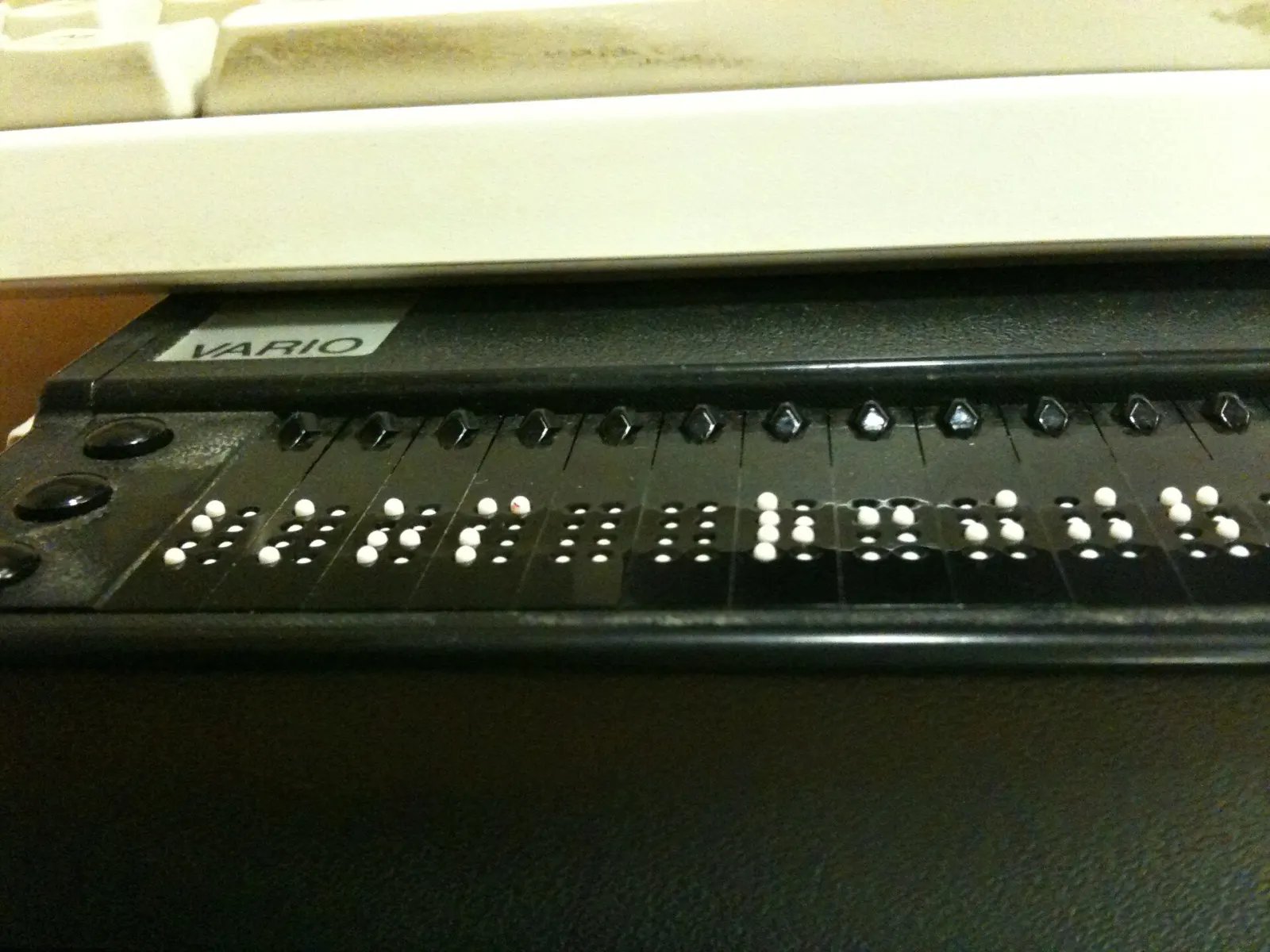
Illustrative screen-reader output
The court record does not contain a recording of Robles's screen reader. This reconstruction shows how the kinds of missing names and text alternatives alleged in the complaint can affect announcements. Exact output varies by markup, browser and assistive technology.
The illustrative controls provide little identifying information.
| On screen | Announced | Criterion |
|---|---|---|
| Domino's logo | “graphic” | fails 1.1.1 |
| Photo of a pepperoni pizza | “graphic” | fails 1.1.1 |
| Size chooser: Small, Medium, Large | “button. button. button.” | fails 4.1.2 |
| A half-and-half toppings control | “clickable” | fails 4.1.2 |
| Delivery address field | “edit, blank” | fails 3.3.2 |
| Green Add to order button | “button” | fails 4.1.2 |
| Checkout link | “link” | fails 2.4.4 |
Illustrative reconstruction based on categories described in the complaint, not a capture or recording of Domino's website. The selected criteria shown here are Level A; the court did not make this criterion-by-criterion WCAG mapping.
The three WCAG conformance levels as a stack. AAA is enhanced and rarely required in law. AA is the level regulators and contracts often name. A is the floor, and several allegations in this case map to criteria at that level. This is an editorial mapping, not a court finding.
One further fact, which comes from outside the litigation, changes how the failure should be read. Blind users rated the Domino's iOS app highly in 2012 and early 2014, praising the pizza builder and its braille support, and then documented it breaking in October 2014. The company had built something that worked and then shipped releases that users reported had broken it. The record does not identify why the regression occurred, but it illustrates that accessibility can be lost as a product changes.
Six years, step by step
Marked points are the moments where the dispute could have ended and did not.
- 2017, District Court: Dismissed.
- 2019, Ninth Circuit: Reversed.
- 2019, Supreme Court: Declined.
- 2021, District Court: Judgment.
- 2022, Settled: Confidential.
- Total elapsed time: 5 years, 9 months.
Dec 2008
WCAG 2.0 is published
The standard Robles would later ask for becomes a W3C Recommendation, nearly eight years before the complaint.18 Jul 2015
First failed order
Robles cannot complete an order on the website. The court later records further attempts in July 2016, September 2016 and February 2017, and app attempts in July 2016 and June 2019.1 Sep 2016
Complaint filed
Four causes of action in the Central District of California, covering the website and the app. The complaint asks for a WCAG 2.0-based injunction, statutory damages of $4,000 per violation under California law, attorney's fees, expenses, interest and costs. It does not address whether ordinary telephone ordering was available.Feb 2017
A phone line appears
After the suit is filed, the website begins displaying a number for screen-reader users. The district court notes callers may be placed on hold. Robles later testifies he called twice and waited more than forty-five minutes each time before giving up.20 Mar 2017
Domino's wins round one
Judge S. James Otero agrees the ADA reaches the website and app, but dismisses all four claims without prejudice under the primary jurisdiction doctrine, holding that ordering compliance with WCAG in the absence of a federal rule flies in the face of due process. He calls on Congress and the Department of Justice to set standards.12 Oct 2018
Argued in the Ninth Circuit
Fourteen disability organisations file in support of Robles. Business groups including the US Chamber of Commerce, the National Retail Federation and the Restaurant Law Center file in support of Domino's.15 Jan 2019
Reversed
The Ninth Circuit holds the ADA applies, because the site and app connect customers to physical restaurants, a nexus Domino's did not contest. It rejects the due process argument and the primary jurisdiction dismissal, and returns the case for discovery.13 Jun 2019
Petition to the Supreme Court
Domino's retains Lisa Blatt of Williams and Connolly as Supreme Court counsel. Five amicus briefs are filed in support of the petition. None are filed for Robles.7 Oct 2019
Certiorari denied
The Supreme Court declines the case without comment. The Ninth Circuit decision stands. Litigation continues for another two years and eight months.23 Jun 2021
Judgment on the website
Judge Jesus G. Bernal grants summary judgment for Robles on the website claims, orders conformance with WCAG 2.0 and awards $4,000. The claims about the app are not resolved; whether it was accessible by then remained a disputed fact.Nov 2021
The parties report a settlement
The parties file a joint notice saying they have reached a settlement. The case does not end: in January 2022 they tell the court that they were unable to complete it and ask for a trial date.21 Jan 2022
The first settlement fails
The parties notify the court that they have been unable to settle. The remaining app claims and related issues remain pending until a later agreement.6 Jun 2022
Settled
A second notice of settlement is filed and the case is dismissed with prejudice on 21 June 2022. The agreement's terms are confidential. In a public joint statement, the parties said Domino's was committed to maintaining the accessibility of its website and apps through compliance with WCAG 2.0 Levels A and AA. The app claims are not resolved on the merits before dismissal.Checked 2 Sep 2026
Domino's publishes an accessibility policy
The company states that it strives to comply with ADA Title III and WCAG 2.0 Levels A and AA, assigns responsibility across its technology, customer care and legal teams, and runs a reporting line and an accessibility email address. The wording is careful: it claims effort rather than conformance, and names the version from the 2021 injunction rather than the current WCAG 2.2.
How Domino's defended it
Five arguments, made across three courts. Understanding why four of them failed is the practical value of this case, because they recur in website-accessibility litigation and commentary.
| Argument | Where it was made | Result |
|---|---|---|
| The website is not a place of public accommodation, so the ADA does not reach it | District court, Ninth Circuit, cert petition | Rejected. The statute covers services of a public accommodation, not only services in one. |
| Enforcing the ADA online without a federal technical rule violates due process | District court, Ninth Circuit | Won in 2017, reversed in 2019. Fair notice of a legal duty is required, not a blueprint for compliance. |
| Courts should defer to the Department of Justice | District court, Ninth Circuit | Won in 2017, reversed in 2019. The DOJ had withdrawn its rulemaking, so delay was not just likely but inevitable. |
| A telephone line is an adequate alternative | District court, 2021 | Rejected on the facts. Two calls, more than forty-five minutes on hold each time. The court did not need to decide every other feature comparison. |
| Compliance is expensive and the litigation is opportunistic | Cert petition | Never tested. Presented as policy argument, not as a legal defence. |
“The Constitution only requires that Domino's receive fair notice of its legal duties, not a blueprint for compliance with its statutory obligations.”
The last row is often misunderstood. In its Supreme Court petition Domino's argued at length that accessibility is costly, citing a grocery chain's $250,000 estimate, bank estimates reaching $3 million per website and a publishers' floor of $100,000. But those were other companies' numbers, offered as a reason for the Court to take the case. At the Ninth Circuit stage, on its own website, Domino's did not argue that fixing it would be an undue burden or would fundamentally alter its business, which are the actual statutory defences. The court noted that absence expressly.
“No person who has ever waited on hold with customer service, or ever been hungry for a pizza, would find this to be an acceptable substitute for ordering from a website.”
At the Supreme Court the argument shifted again. Rather than defend the website in isolation, Domino's proposed that Title III should be satisfied by the combined means of access a business offers, so that no single channel need be accessible on its own provided the whole adds up to equal enjoyment. Had it been accepted, a working phone line would have excused an unusable website. The Court did not take the case, so the theory was never tested.
In its statement on the day certiorari was denied, Domino's said it had already developed an accessible website and app and pressed for national rulemaking to eliminate what it called a tsunami of website accessibility litigation. That word was Domino's own, taken from its petition rather than from the business groups supporting it.
How each argument fared
One argument succeeded, once, and was reversed. Two were never tested at all, including the one about cost.
| Argument | District, 2017 | Ninth Circuit, 2019 | Final |
|---|---|---|---|
| The ADA does not reach a websiteRejected at every stage. The statute covers the services of a public accommodation. | Failed | Failed | Failed |
| No federal technical rule, so enforcing it denies due processThe only argument that ever won, and it was reversed. | Succeeded | Failed | Failed |
| Defer to the Department of Justice firstReversed once the DOJ withdrew its rulemaking, making delay indefinite. | Succeeded | Failed | Failed |
| A telephone line is an adequate alternativeDecided on the facts in 2021: two calls, more than forty-five minutes on hold each. | Not decided | Not decided | Failed |
| Compliance is too costly across the industryMade as policy in the cert petition. Never pleaded as undue burden for its own site. | Not decided | Not decided | Not decided |
Practical lessons from the record
Six points where a different operational or litigation choice could have shortened the dispute. The public record does not disclose what any alternative would have cost.
Exit point 1. Address basic Level A failures before release
Automated checks can identify some missing text alternatives and accessible names. Manual keyboard and screen-reader testing is still necessary to determine whether controls are understandable and whether a customer can complete an order.
Practical step: test accessible names, text alternatives and the ordering journey before release.
Exit point 2. Give people a way to report a barrier, and answer it
The record says Domino's began displaying a dedicated screen-reader assistance number after the suit was filed. It does not establish that no other telephone or contact route previously existed. A documented, monitored accessibility channel can nevertheless surface barriers before they become prolonged disputes.
Practical step: publish a monitored feedback channel with a named owner.
Exit point 3. Settle and remediate on receipt of the complaint
The complaint requested $4,000 per violation under California law, along with fees, expenses, interest and costs. The court ultimately awarded one $4,000 recovery, but that later award does not establish what early settlement exposure or remediation would have cost.
Record limitation: the settlement value, legal spend and remediation cost are not public.
Exit point 4. Test the workaround before relying on it
Domino's displayed a screen-reader assistance line after the suit began. Robles testified that he called twice and abandoned each call after waiting more than forty-five minutes. On that undisputed evidence, the court rejected the line as an acceptable substitute for website ordering.
Practical step: measure wait time, availability, privacy and price equivalence.
Exit point 5. Fix it after losing the appeal
In January 2019 the Ninth Circuit held that the ADA applied in this nexus context. Domino's petitioned the Supreme Court, which declined review, and the parties continued litigating through the 2021 judgment and 2022 dismissal.
Procedural fact: the case continued for about three and a half years after the Ninth Circuit decision.
Exit point 6. Do what the company now does anyway
Domino's today publishes an accessibility policy naming WCAG 2.0 Levels A and AA, assigns responsibility across its technology, customer care and legal teams, retains third-party accessibility consultants and runs a reporting line and email address. The policy says Domino's strives to comply; it does not itself prove conformance or disclose the confidential settlement terms.
Current policy, not proof of past or present conformance.
What to do if you are on the receiving end
The practical translation of the six exit points above, in the order you are likely to need them.
- Do: Run an automated scan on your main journeys and fix every Level A failure it finds. That is the class this case turned on.
- Do: Publish an accessibility contact route with a named owner, and answer it.
- Do: Put an automated check in the pipeline so a release cannot silently remove a label.
- Avoid: Do not buy an overlay and treat the problem as closed. The defendant here did not, and the reason is that it does not work.
- Do: Reproduce it on the device and software the complainant actually used.
- Do: Fix what is reproducible before arguing about what is not.
- Do: Get a written scope and a date for the rest.
- Avoid: Do not offer a phone line as the remedy without measuring what happens when someone calls it.
- Avoid: Do not rely on the absence of a federal technical rule. Courts have declined to wait for one since 2019.
- Do: Decide early whether you are fighting the barrier or the duty. Fighting the duty is what cost six years here.
- Do: Preserve the evidence: the build, the device, the dates.
- Do: If you intend to argue undue burden, plead it, with your own numbers.
- Avoid: Do not assume your own expert will help. Here, the defendant's expert could not place an order either.
Public and professional reaction
The court record is only part of the story. A Hacker News discussion posted after the Supreme Court denial attracted extensive debate, and the public arguments were often different from Domino's due-process argument in court.
Developers argued about whether the duty should exist at all
Hacker News records 591 descendants for the discussion. That metadata includes deleted or unavailable items, so it should not be read as 591 surviving substantive comments. The observations below are qualitative, not a frequency analysis.
Participants repeatedly raised telephone ordering, the absence of a government technical regulation, implementation cost, litigation incentives and the practical limits of automated testing. Those comments show the range of public reaction; they do not establish how common any position was outside that discussion.
At least five surviving comments were posted by one participant who identified as blind. He described web accessibility worsening as frameworks proliferated, rejected separate accessible versions because they tend to fall out of sync, and described accessibility reports and a submitted code change being ignored. This is evidence of one participant's experience, not a representative survey of blind users.
Blind users had already documented the app breaking
A useful independent record of what Domino's was like to use was not made by either party. It sits on AppleVis, a community site run by and for blind Apple users, where the app has a page with comments running from 2012 to 2023.
In September and November 2012, and again in March 2014, blind users praised it. One described the pizza builder working properly, including putting a topping on one half of the pizza, the exact interaction the litigation was later about. Another praised its support for braille displays. In October 2014 the same community reported it breaking: payment fields could no longer be reached by swiping, the order tracker stopped working, and buttons lost their labels. By July 2023 other users reported it working again.
Robles filed in September 2016, after the reported regression. The AppleVis posts independently document that some blind users encountered app barriers before the lawsuit, but they do not test Robles's device, version or individual experience. The court later denied summary judgment on the app claims because its current accessibility remained a disputed fact.
Disability organisations answered the no-standard argument
Fourteen disability organisations had backed Robles at the Ninth Circuit. After the denial, the American Council of the Blind answered the no-standard argument on its merits rather than in general terms: accessibility guidelines have existed for decades, and the latitude they leave a business is a benefit to that business rather than a defect. That is the same answer the Ninth Circuit gave when it said flexibility in the standard was a feature rather than a bug.
Robles's own counsel called the certiorari denial the right call on every level, and framed the underlying proposition as one nobody actually disputes: that blind people need access to websites and apps to take part in ordinary life. That framing is worth noticing, because it is precisely the proposition large parts of the public discussion went on to dispute.
Blind organisations backed the case and attacked the machinery around it
This position is more nuanced than a simple choice between supporting all such litigation and opposing accessibility enforcement.
In the same month that certiorari was denied, the National Federation of the Blind published an article in its member magazine attacking high-volume accessibility litigation. Lawyers were picking a category of business and filing near-identical complaints in bulk, some of the resulting suits were close to meritless, and small businesses were settling for a few thousand dollars without fixing anything. It warned that bad cases make bad law, and told members to decline invitations to serve as named plaintiffs in such campaigns. A resolution adopted that year condemned mass filings and confidential cash settlements, and called for public settlement agreements with specific remediation commitments instead.
At that same convention, the disability rights lawyer Eve Hill, whose firm later helped take this very case to judgment, told an audience of blind people that some blind people and some lawyers treat inaccessible websites as a business opportunity rather than a civil rights problem. Her distinction is the one worth borrowing: the problem is not the number of lawsuits but their quality, and whether the lawyer bringing them can actually litigate. She defended the Domino's case in the same breath.
The documented position was therefore more specific than blanket support for or opposition to litigation: these organisations supported the Domino's case while criticising high-volume practices that could produce payments without remediation.
Practitioners were harder on both sides than the coverage was
The disability rights lawyer Lainey Feingold, who published a response to the public reaction a week after the denial, spent more of it deflating the result than celebrating it. She also addressed a recurring objection, and it is worth stating plainly because it is a matter of law rather than opinion. Title III of the ADA provides no damages to private plaintiffs at all. The remedy is an injunction, plus legal fees to a prevailing party, which is the ordinary enforcement mechanism across American civil rights statutes. The $4,000 in this case came from a Californian state statute, not the ADA.
Criticism of the plaintiffs' bar came from inside the profession too. Karl Groves, an accessibility consultant and court-qualified expert, has argued that mass demand-letter campaigns actively damage the cause: they crowd out collaboration, and they invite judges to treat genuine claims as opportunism. He has advocated collaborative approaches as an alternative. The Domino's record does not show that the parties used a structured-negotiation process before suit.
A critique of the nexus approach
Writing in 2019, developer Ben Myers mapped the disagreement between the circuits and warned that resting the duty on a physical connection could end up harming the accessible web rather than advancing it, because it leaves the business that exists only online with the weakest obligation. The pandemic sharpened the point: when venues close, the website is not an adjunct to the service, it is the service.
The later ruling received less attention
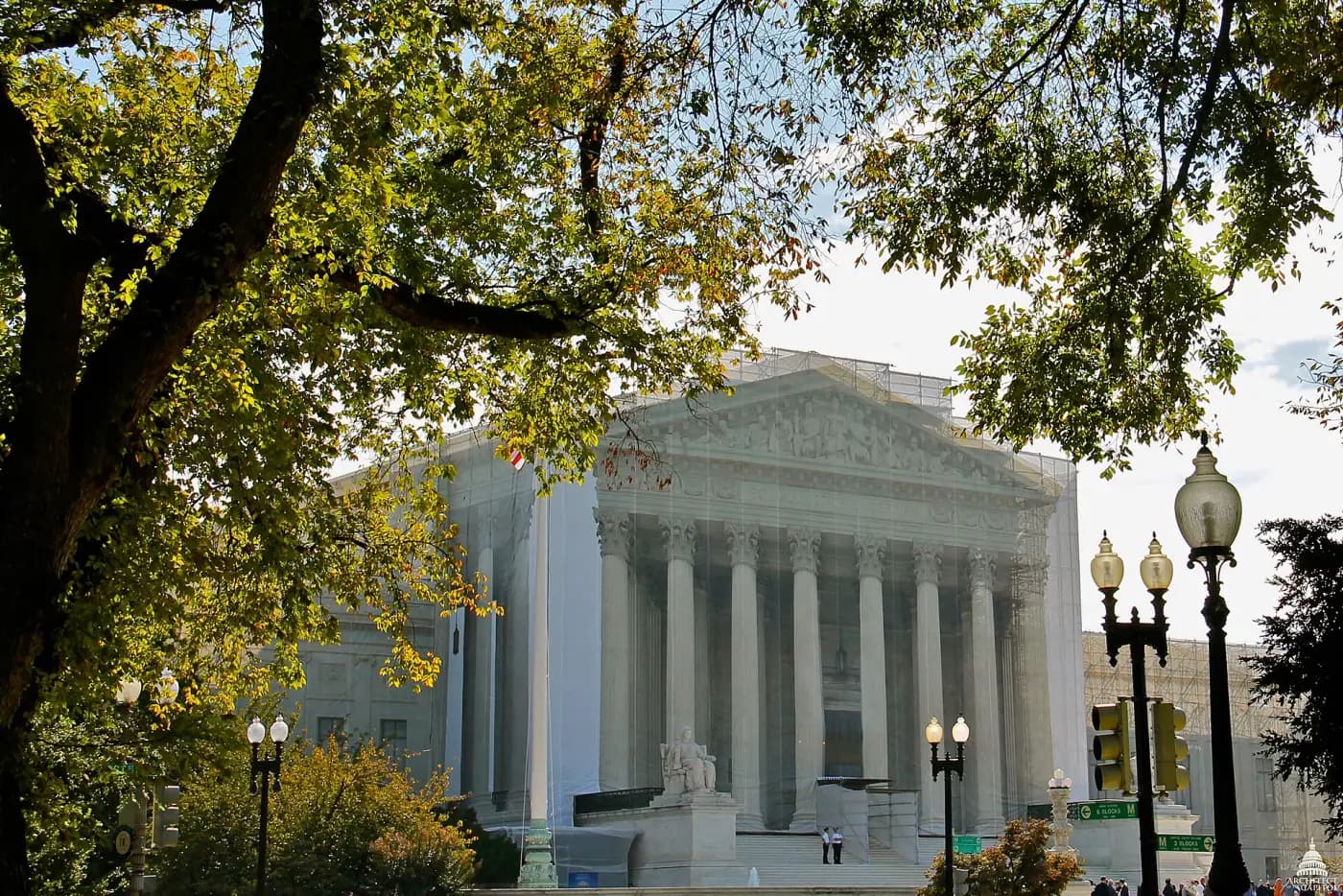
Public discussion peaked around the Supreme Court's denial of review, even though that event did not decide the merits.
The October 2019 event was a denial of certiorari. It decided nothing. It produced no opinion, set no precedent, and did not even tell you which way the court leaned. The adjudication that resolved the website merits was the June 2021 summary judgment; the remaining app claims ended through settlement and dismissal in June 2022.
The sources reviewed for this article show substantially more public discussion of the 2019 denial than of the 2021 summary-judgment order. That helps explain why some later summaries incorrectly say the Supreme Court ruled on the merits, that Domino's was fined, or that the court specifically ordered Level AA.
What the record says about the plaintiff
The sources reviewed for this article did not reveal a public interview with Robles; the public statements attributed to his side came from his lawyers. Domino's told the Supreme Court that he had filed at least fourteen similar lawsuits, a defence characterization rather than a finding made by the Court. In this case, the district court found the website was not fully accessible in 2021. Domino's 2020 expert did not concede every historical defect, while AppleVis posts separately documented an app regression before Robles filed.
Correcting the record
This case is described inaccurately in a great deal of published commentary, including by vendors selling accessibility products. The differences matter if you are relying on it to brief a board. Eleven claims circulate widely enough to be worth answering directly, each set here against what the filings and the judgment actually say.
Often said
The Supreme Court ruled against Domino's.
The record
The Court denied certiorari on 7 October 2019. A denial is not a ruling on the merits and sets no precedent. The binding decision is the Ninth Circuit's.Often said
Domino's was ordered to meet WCAG 2.0 Level AA.
The record
The June 2021 order requires conformance with the WCAG 2.0 guidelines and specifies no level and no deadline. Level AA appears in Domino's own later policy, not in the order.Often said
Domino's was fined.
The record
There was no fine. $4,000 in statutory damages was awarded under California's Unruh Act, treated as a single violation rather than $4,000 per visit.Often said
The plaintiff was in it for the money.
The record
The record does not establish Robles's subjective motive. His ADA claim offered injunctive relief rather than private damages, while his Unruh Act claims requested $4,000 per violation and the complaint also sought fees and costs. The court disregarded Domino's motive allegations when they failed to dispute the facts to which they were offered as objections.Often said
Court documents showed fixing the site would have cost $38,000.
The record
The reviewed complaint, appellate filings, Supreme Court filings, Ninth Circuit opinion and 2021 judgment do not contain that figure. Its traceable public origin is an August 2019 tweet asserting that Domino's had disclosed it in court papers; the linked article did not state a remediation cost. The public record reviewed here does not establish Domino's remediation cost.Often said
The case cost Domino's millions, against a cheap fix.
The record
The comparison cannot be verified from the public record. Domino's litigation spend, remediation cost, fee resolution and settlement amount are not disclosed. The publicly documented $4,000 figure is the Unruh Act amount awarded to Robles, not the total cost of the case.Often said
The cert denial opened the floodgates to web accessibility lawsuits.
The record
The cited federal series does not show a jump in 2019: it records 2,256 cases, two fewer than in 2018. The large annual increase occurred in 2018, when filings rose 177% from 814 to 2,258 after the Justice Department withdrew its web rulemaking. That timing alone does not prove what caused the increase.Often said
The courts ruled the app inaccessible.
The record
They did not. Summary judgment was denied on both app claims because accessibility was a disputed fact, and the claims were never decided. Only the website was adjudicated.Often said
The case established that accessibility overlays cannot substitute for accessible code.
The record
It established nothing about overlays. No overlay was at issue in the complaint, Ninth Circuit opinion or 2021 judgment. The presence or absence of a widget on Domino's current site would not change what the case decided.Often said
Blind people and their organisations were united behind the litigation.
The record
Fourteen disability organisations supported Robles in the Ninth Circuit. Separately, the National Federation of the Blind criticised high-volume, near-identical accessibility cases and confidential cash settlements while continuing to support the Domino's case. Those records show a distinction between this case and criticism of some litigation practices.Often said
The case establishes that all websites are covered by the ADA.
The record
It does not. The Ninth Circuit relied on the nexus between the website and physical restaurants, and expressly declined to decide the position where no such nexus exists. Other circuits differ.
What it means now
Domino's told the Supreme Court that leaving the decision undisturbed would turn a flood of litigation into a tsunami. The filing record does not support the case being the cause. The largest year-over-year increase in the cited federal series occurred in 2018, after the Justice Department withdrew its web accessibility rulemaking in December 2017; that timing does not establish causation.
The series records a 177% increase in 2018, after the Justice Department withdrew its web rulemaking. Timing alone does not establish causation. In 2019, when the Supreme Court declined this case, the annual total was two cases lower than in 2018.
Hover or tab across the bars for the figure for each year.
Federal courts only. Source: Seyfarth Shaw ADA Title III tracker.
Certiorari was denied in October 2019, and that year was flat against 2018. Counts that include state courts run considerably higher, so do not mix the two series. A separate EcomBack dataset, which includes federal and state cases, reported that in the first half of 2025 sixteen firms accounted for more than 90 percent of its matters and that the firm representing Robles had the largest count in that period. That concentration figure should not be combined with the federal-only chart. Our accessibility lawsuit tracker keeps the current numbers.
One part of Domino's complaint also turned out to be durable. There is still no federal technical regulation for private business. The rule the Justice Department published in 2024, adopting WCAG 2.1 Level AA, binds state and local government under Title II only.
Where each federal circuit stands
Robles binds the Ninth Circuit. It does not settle the country, and the answer to “does this apply to us” still depends on where a claim is brought.
A physical nexus is required
3rd6th9thThe site is covered when it connects customers to a physical place of business. This is the rule Robles settled for the Ninth.
A website can qualify on its own
1st7thNo physical connection is needed; a site offering the goods and services Title III lists is covered by itself.
District courts are divided
2ndNo controlling appellate holding, and trial courts within the circuit have gone both ways.
Unsettled after a vacated opinion
11thA panel held a website was not a public accommodation, then the court vacated that opinion as moot in December 2021. Nothing binding survives it.
Not squarely decided at appellate level
4th5th8th10thD.C.Fed.No controlling decision on whether Title III reaches a website.
Positions as at 2026. Circuit numbers are shown as chips; a business is exposed to the rule of the circuit where it is sued, not where it is based.
Every decision behind this map, with its current status, is in the ADA website case law reference.
What has changed since the case closed
Three developments since 2022 bear on the argument this case started, and two of them cut against the plaintiffs' bar rather than for it.
In February 2026 the Justice Department filed a statement of interest opposing a proposed class settlement in a website accessibility case, objecting that the injunctive relief set out no concrete steps, that monitoring was optional, and that $2.52 million in fees was disproportionate to what class members received. It recorded that the same counsel had filed substantially the same lawsuit more than 500 times between 2019 and 2023, mostly resolving in undisclosed individual settlements, and said it opposed using a civil claim principally to enrich class counsel on the backs of disabled people. That is the federal government making, in court, the criticism the National Federation of the Blind made in its member magazine in 2019.
Second, filings by people representing themselves rose sharply in 2025, which practitioners attribute to general-purpose AI tools making a complaint easy to draft. Third, Missouri has now responded: Missouri enacted a safe harbour operative from 28 August 2026. It creates a rebuttable presumption concerning allegedly abusive litigation when a defendant takes substantial good-faith steps to correct a noticed violation within ninety days; it does not replace the substantive federal accessibility duty.
None of this disturbs the holding. It does mean the honest summary of 2026 is not that enforcement is uncontested, but that Robles's nexus holding remains binding in the Ninth Circuit while the machinery around it is under pressure from the courts, the regulator and disability organisations alike.
Did any of it make websites better?
WebAIM's 2021 survey of the top million home pages found the Food and Drink category improving from an average of 66.1 automatically detected errors in 2020 to 46.8 in 2021. Its authors said increased accessibility litigation may have contributed to the change.
This is an observational category-level comparison. It does not establish that litigation caused the decline, that Domino's was among the measured sites that improved, or that a blind customer could complete an order. Automated home-page error counts and end-to-end usability are different forms of evidence.
Evidence limit
Did the website actually get fixed?
The public record reviewed for this case study cannot answer that question conclusively. The 2021 order found that the website was not fully accessible at that time. Domino's policy, checked 2 September 2026, describes an accessibility program, but a policy is not proof of conformance.
- Court finding
- In June 2021, no expert had found the website fully accessible. The court ordered compliance with WCAG 2.0 without specifying a conformance level or deadline.
- Policy checked 2 September 2026
- Domino's says it strives to comply with WCAG 2.0 Levels A and AA and describes monitoring, training, consultants and feedback channels.
- What remains unknown
- This repository contains no reproducible, end-to-end test of the current ordering flow or app, so it cannot support a present-day conformance or usability conclusion.
Home-page markup counts cannot demonstrate that a customer can configure, purchase and schedule an order. A supportable current conclusion would require documented keyboard and screen-reader tests of the complete journey, with URLs, builds, devices, browsers, assistive technologies, dates and results preserved.
What to take from it
- The nexus argument is settled in the Ninth Circuit. If your website connects customers to a physical location, expect it to be covered.
- The absence of a federal technical rule did not erase the duty. The Ninth Circuit held that Domino's had fair notice of its ADA obligation and declined to wait for the Justice Department to issue a technical standard.
- An alternative channel must be measured. The line failed on the facts here because Robles waited more than forty-five minutes on each of two calls. Comparable timing, privacy, independence and access to the same offers should be tested rather than assumed.
- Several allegations mapped to Level A criteria. Missing text alternatives and accessible names can sometimes be detected automatically, but their quality and the usability of a complete journey require manual review.
- Your own expert's findings may narrow a defence. Domino's expert completed ordinary website and app orders in 2020, but found the website was not fully accessible and could not schedule a future website order.
- Accessibility is a maintenance property, not a project. Blind users praised the app in 2012 and reported an October 2014 version broken; the app was part of the complaint filed in 2016.
Primary record and attributed analysis
Sources
Court holdings and procedural facts are drawn from the complaint, orders and dockets below. Later policy, filing and community claims are attributed to their own sources. Where the public record is silent, particularly on costs and the confidential settlement, this page does not estimate.
Primary
- Original complaint, Document 1 (1 September 2016)
- District court dismissal (20 March 2017)
- Ninth Circuit opinion, 913 F.3d 898 (15 January 2019)
- Domino's petition for certiorari, No. 18-1539
- Supreme Court docket, No. 18-1539
- District court order granting summary judgment (23 June 2021)
- Joint notice of settlement (5 November 2021)
- Full district court docket
- June 2022 settlement update and public joint statement
- Domino's accessibility policy text, checked 2 September 2026
Government and filing data
- Justice Department fact sheet on the Title II web and app rule
- Justice Department statement on the Fashion Nova class settlement (2 February 2026)
- Missouri SB 907 enacted text, including the 90-day safe-harbour provision
- Seyfarth Shaw federal website-accessibility filing series, 2017–2025
- EcomBack first-half 2025 filing and law-firm dataset
- Seyfarth Shaw on the 2025 rise in pro se filings and its AI attribution
Commentary and community
- Seyfarth Shaw on the 2021 ruling
- Lainey Feingold answering the public reaction
- AppleVis, blind users on the Domino's app, 2012 to 2023
- Braille Monitor on drive-by accessibility lawsuits (October 2019)
- Karl Groves on drive-by demand letters
- WebAIM Million 2021, on litigation and the food and drink sector
- Hacker News discussion and its 591-descendant metadata, 8 October 2019
- Surviving comments by the self-identified blind participant: 1, 2, 3, 4, and 5
- Archived August 2019 thread from which the unsupported $38,000 claim spread
- Ben Myers on the nexus test and the circuit split
- American Council of the Blind on the cert denial
- American Bar Association overview of the circuit disagreement
Nothing on this page is legal advice. Community comments are used as attributed examples of public reaction, not as representative survey evidence. The circuit graphic is an editorial summary and distinguishes square website holdings from positions commonly inferred from broader public-accommodation precedent.
Discussion
Add to this case study
Corrections, primary sources and first-hand experience are all welcome, particularly from people who worked on this case or who use assistive technology. Comments are read before they appear.
Essential Accessibility Resources
Comprehensive tools, checklists, and guides to help you create inclusive digital experiences